
Shannon Jamail
She is a best-selling author, podcast host, retreat leader, therapist turned mentor, Yoga Teacher trainer, and tequila connoisseur (not really, but she does enjoy sipping on a good pour).
A Guide for the Entrepreneur Who Wants to Host Retreats Profitably
You find the dreamiest retreat center. You fall in love. Then you see the fine print. Full buyout. Twenty-guest minimum. A deposit due eight months before you’ve sold a single spot.
And just like that, you’re not a retreat leader anymore. You’re a stressed-out person doing math at 2am.
Here’s an option a lot of retreat leaders scroll right past: boutique hotels.
If you’re an entrepreneur who wants to host retreats profitably (and not just break even and call it a “learning experience”), it’s time to seriously consider whether you should partner with boutique hotels. They need what you bring. You need what they have. That’s a partnership.
Let’s break down why it works, how to pitch it, and how to set up the deal so you actually keep some money at the end.
Why Boutique Hotels Want to Partner With Retreat Leaders (Yes, Really)
Here’s the dirty little secret of the hotel world. Weekends are easy. Tuesdays are not.
Industry data shows boutique hotels often see midweek occupancy drop sharply compared to weekends, sometimes by 20 to 35 percentage points. That’s a lot of empty, beautifully styled rooms just sitting there looking pretty for nobody.
Now picture what you walk in with:
- A group of guests who arrive on a Sunday or Monday and stay three nights
- Built-in programming the hotel doesn’t have to create, staff, or market
- Guests who eat in the restaurant, order the wine, book the massage, and buy the candle in the lobby
- Your audience, your email list, and your social media, all talking about their property
Wellness travel keeps growing, and hotels know it. But most boutique properties can’t afford to hire a full-time wellness director or build out a retreat program from scratch. You are the program. That’s your leverage.
What’s in It for You (Spoiler: A Lot)
Okay, so the hotel wins. What about you?
No full-buyout pressure. Most boutique hotels will work with a room block instead of making you rent the whole property. That means a smaller group can still be a profitable group.
Hospitality is already handled. Housekeeping, front desk, food service, cleanup. That’s a whole layer of operations you don’t have to build, staff, or stress over.
Instant ambiance and credibility. The design, the photos, the “ooh, where is that?” factor. A beautiful hotel helps sell your retreat before you’ve said a word.
Shared marketing. Many hotels will feature your retreat in their newsletter, on their socials, or to guests already staying with them. Free reach. Love that.
It’s repeatable. This is the big one. If you’re wondering how to turn retreats into recurring revenue, a hotel partnership is one of the cleanest paths. Same property, same season, every year. The hotel gets a calendar it can count on. Your past guests get a tradition they can plan around. And you stop reinventing the wheel every single time.
How to Pitch a Boutique Hotel (Without Sounding Like You’re Asking for a Favor)
You are not begging for a discount. You are bringing a solution to a business problem. Act like it.
1. Pick the right hotels. Look for independent properties with roughly 15 to 60 rooms, at least one space where your group can gather, and a vibe that actually matches your retreat. Independent is key, because the decision-maker is usually on site instead of three layers up at corporate.
2. Talk to the right person. Ask for the director of sales or the general manager. Not the front desk. Not the Instagram DMs.
3. Lead with their problem. Open with midweek and shoulder season. “I bring groups of 10 to 16 guests for three-night retreats, Sunday through Wednesday.” Now you have their attention.
4. Bring a one-page proposal. Include who your audience is, your preferred dates, expected headcount and rooms, an estimated food and beverage spend, what space you need, and exactly how you’ll promote the property.
5. Start with a pilot. Suggest a two- or three-night midweek retreat as a first run. Lower risk for both of you, and a chance to prove you’re a dream partner.
How the Entrepreneur Who Wants to Host Retreats Profitably Structures the Deal
Here’s where people get burned: a gorgeous hotel with a bad contract is still a bad deal. If you want to know how to make money with retreats, it starts right here, in the negotiation.
Negotiate these before you sign:
- Meeting space: Ask for the room rental to be waived in exchange for a food and beverage minimum
- Attrition: How many rooms in your block can go unbooked before you pay? Push for 80% or lower
- Cutoff date: When unbooked rooms get released back to the hotel (30 days out is common)
- Comp rooms: Many hotels offer one comp room for a set number of paid room nights. Ask
- Perks for guests: Spa discounts, a welcome drink, late checkout. Small touches, big impression
Price for profit, not for hope. Your retreat fee needs to cover the food and beverage minimum, facilitators, your support team, marketing, materials, and your time. Then add profit on top. Breaking even is not success. Say it with me.
Define who does what. The hotel staff becomes part of your retreat team, so get clear on roles. Who handles dietary needs? Who resets the room between sessions? Who do guests call at 10pm when the AC dies? Put it in writing.
When a Boutique Hotel Isn’t the Right Fit
Boutique hotels aren’t perfect for every retreat.
If your programming depends on total privacy, wide-open land, deep nature immersion, or a group that wants the whole place to themselves, you may be happier with a dedicated retreat venue or a full buyout. Mixing your vulnerable breathwork circle with a bachelorette party in the lobby? Not ideal.
The goal isn’t to pick the fanciest venue. It’s to pick the one that fits your guests, your programming, and your profit margin.
Frequently Asked Questions
Should retreat leaders partner with boutique hotels if they have a small audience?
Yes. That’s actually one of the best reasons to do it. A room block lets you host a smaller group without the risk of a full buyout, and the hotel’s own marketing can help you reach new guests.
How many guests do I need for a boutique hotel group rate?
It varies by property, but many hotels start group rates around 8 to 10 rooms per night. Always ask, especially for midweek dates when hotels are more flexible.
What should I negotiate first?
Start with the meeting space (ask to waive it against a food and beverage minimum), then attrition and the cutoff date. Those three terms have the biggest impact on your risk and your profit.
Can a boutique hotel retreat actually be profitable?
Absolutely, if you price it right. With lower upfront costs, no full buyout, and hospitality already handled, a hotel partnership can be one of the smartest ways to make money with retreats. Just make sure your program fee covers every cost plus profit.
Ready to Build Partnerships That Actually Pay You?
Knowing you should partner with boutique hotels is step one. Knowing how to price it, pitch it, and fill it is where the profit lives.
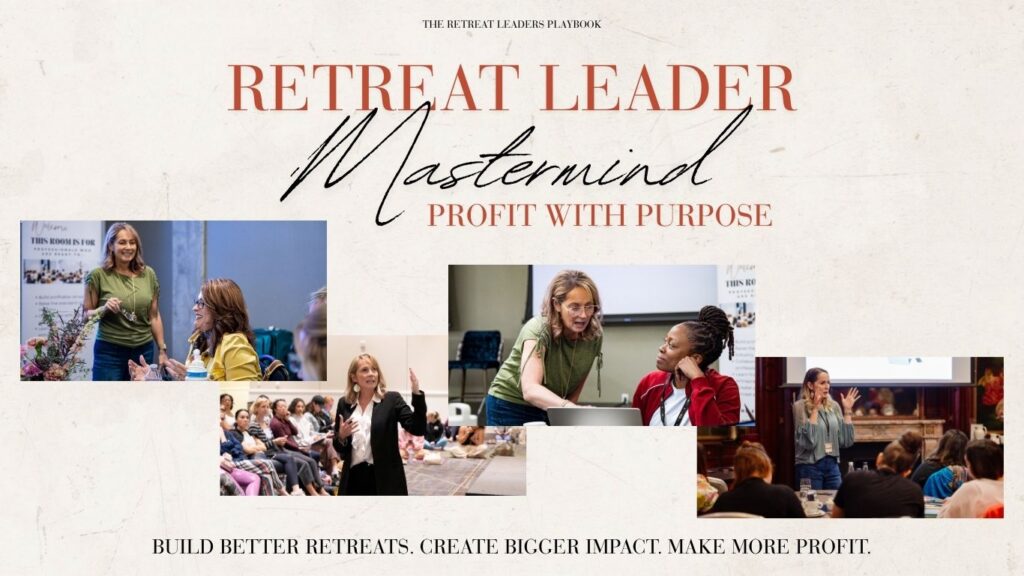
That’s exactly what we dig into at the Profit with Purpose Retreat Leader Mastermind this January. It’s an in-person, strategy-packed experience for retreat leaders who are done guessing and ready to build a retreat business that’s genuinely profitable, every single time. And yes, Retreat Leaders Academy access is included when you join.
Save your seat: https://mindbodycomplete.com/
work with US
Ready to Transform Your Retreats?
Join our community of successful retreat leaders and unlock the secrets to hosting profitable, life-changing retreats


