
Shannon Jamail
She is a best-selling author, podcast host, retreat leader, therapist turned mentor, Yoga Teacher trainer, and tequila connoisseur (not really, but she does enjoy sipping on a good pour).
The Honest Take for the Entrepreneur Who Wants to Host Retreats Profitably
Let’s skip the sunset yoga photos for a second.
If you’re a coach, wellness pro, or small business owner who keeps thinking “I should host a retreat,” you’ve probably also thought, “But is hosting retreats worth it? Like, actually worth it? For my bank account, my calendar, and my sanity?”
Good. That’s the right question(s). And as an entrepreneur who wants to host retreats profitably (not just host a really nice, really expensive party for strangers), you deserve a real answer, not a highlight reel.
I’ve hosted 100+ retreats over 15+ years around the globe and I run a 46-acre retreat venue in the Texas Hill Country. I’ve seen retreats make people a lot of money. I’ve also watched people lose their deposit, their weekend, and their will to live over a catering mix-up. So here’s a REAL breakdown.
The Short Answer: Is Hosting Retreats Worth It?
Yes. If you run it like a business.
No. If you run it like a hobby with a deposit.
That’s really the whole thing. Retreats can be one of the most profitable, highest-impact offers in your business. But “worth it” doesn’t happen by accident. It happens when you price for profit, plan your marketing like an adult, and stop doing every single job yourself.
Breaking even is not success. Breaking even means you worked for free for six months and paid for the privilege. Let’s not do that.
The Pros: Why Retreats Can Be Seriously Worth It
1. Real profit in a short window
A well-priced retreat can bring in more profit in one long weekend than months of one-on-one sessions. You’re serving a group, at a premium price, for a focused experience. That math works in your favor when you set it up correctly.
2. The demand is real
People want to unplug, reset, and be in a room with humans instead of a Zoom grid. The wellness space keeps growing (the global wellness economy hit a record $6.8 trillion in 2024, and wellness travel is a big slice of it). You’re not inventing a market. You’re stepping into one.
3. Deeper transformation, better clients
Three days together does what three months of weekly calls can’t. Guests go deeper, get bigger results, and leave with stories. Those stories turn into testimonials, referrals, and repeat buyers.
4. It can become recurring revenue
This is the one most people miss. When you learn how to turn retreats into recurring revenue, a retreat stops being a one-time event and becomes a front door. Past guests rebook. They join your next program, your membership, your mastermind. The retreat is not the finish line. It’s the on-ramp.
5. Authority (and honestly, fun)
Leading a room changes how people see you, and how you see yourself. And yes, it’s fun. Watching a group of strangers leave as friends never gets old.
The Cons Nobody Puts on the Brochure
1. Money goes out before money comes in
Venue deposits, catering minimums, marketing costs. You will spend before you collect. If you haven’t set a minimum headcount and a clear go/no-go plan, that upfront risk can keep you up at night. Despite what some coaches teach; there IS money that is put up, right from the beginning, if you are doing business with legit vendors and venues.
2. Selling takes longer than you think
Most retreats don’t sell out from one Instagram post and a prayer. Guests need time to say yes, ask their spouse, request time off, and save up. If you start marketing eight weeks out, you’re already behind.
3. The logistics are a LOT
Vendors, team members, meals, schedules, room assignments, dietary needs, transportation, the guest who missed her flight, the activity that got rained out. If you’re doing all of that logistics work while also trying to lead the room, something gives. Usually it’s you.
4. It costs energy, not just money
Holding space for a group for days at a time is beautiful and exhausting. If you don’t plan recovery time on the back end (and DURING), you’ll come home with a full heart and an empty tank.
5. There are legal and business details to get right
Contracts, insurance, waivers, cancellation policies. And a big one people miss: retreat leaders generally can’t bundle and sell travel (like airfare) as part of a package without working with a licensed travel agent. Talk to a retreat-savvy attorney before you build your package, not after to get all the legal and business details handled correctly.
Gut-Check: Is This Right for an Entrepreneur Who Wants to Host Retreats Profitably?
Hosting retreats is probably worth it for you if:
- You already have an audience, a client base, or a community that trusts you (it doesn’t have to be huge).
- You’re willing to treat the retreat as an offer with a budget, a profit goal, and a marketing plan.
- You have a “what’s next” offer for guests after they go home.
- You’re okay investing upfront because you’ve done the math, not because you’re hoping.
- You’re willing to get help so you can actually lead.
It’s probably NOT worth it (yet) if:
- You’re hoping the retreat itself will build your audience from zero.
- You plan to charge “whatever feels nice” and figure out costs later.
- You want to do every job yourself to “save money.”
- You’re thinking of it as a one-time vacation with your clients.
If you landed in the second list, that’s not a no. That’s a “not like that.” Fix the setup and the answer changes.
How to Make Money With Retreats (Without Guessing)
Here’s what separates the leaders who love hosting retreats from the ones who swear them off after one.
Put your profit in the budget first
Your profit is a line item, not leftovers. Price for profit, decide what you want to earn, add it to your costs, then set your price and your minimum headcount from there (our pricing guide walks through the math step by step).
Build support into the cost of the retreat
If you need a coordinator to deliver the experience well, that’s a production cost, not a luxury. Your guests paid for you to lead them. Not to watch you hide in the corner texting the caterer.
Start marketing early and give people time to say yes
Six to nine months out is a healthy marketing runway for most retreats. Waitlists, early-bird bonuses, and personal invitations do a lot of the heavy lifting.
Plan the next step before guests leave
Have the next retreat date ready. Have your follow-up offer ready. The best time to invite someone back is when they’re still glowing.
Stop guessing and get a plan
Most retreat leaders aren’t failing because they’re bad at this. They’re failing because nobody handed them the business side. That part can be learned.
Frequently Asked Questions
Is hosting retreats worth it if I don’t have a big following?
It can be. You don’t need 50,000 followers, you need the right 10 to 20 people. A warm email list, past clients, and personal invitations fill more retreats. than a big, cold audience. Start small, price for profit, and build from there.
How much money can you actually make hosting a retreat?
It depends on your price, group size, length, and location, but profitable retreats are built with a 30% to 50% margin after costs. The key is deciding your profit goal before you set your price, not hoping something is left over at the end.
What are the biggest risks of hosting a retreat?
Upfront deposits with no registrations to cover them, starting marketing too late, underpricing, and burning yourself out by handling every detail solo. Most of these come down to planning: a clear budget, a minimum headcount, a long enough marketing runway, and operational help.
How do I turn retreats into recurring revenue?
Treat each retreat as a step in a bigger journey. Before guests leave, offer the next thing: a return retreat, a membership, a group program, or a mastermind. Past guests are your easiest future buyers because they already know, like, and trust you.
Should I hire help for my first retreat?
If your budget allows it, yes. Even part-time help with vendors, schedules, and guest questions protects your energy so you can actually lead. Build the cost into your pricing from the start instead of deciding later whether you can afford it.
Ready to Make Your Retreats Worth It (Every Single Time)?
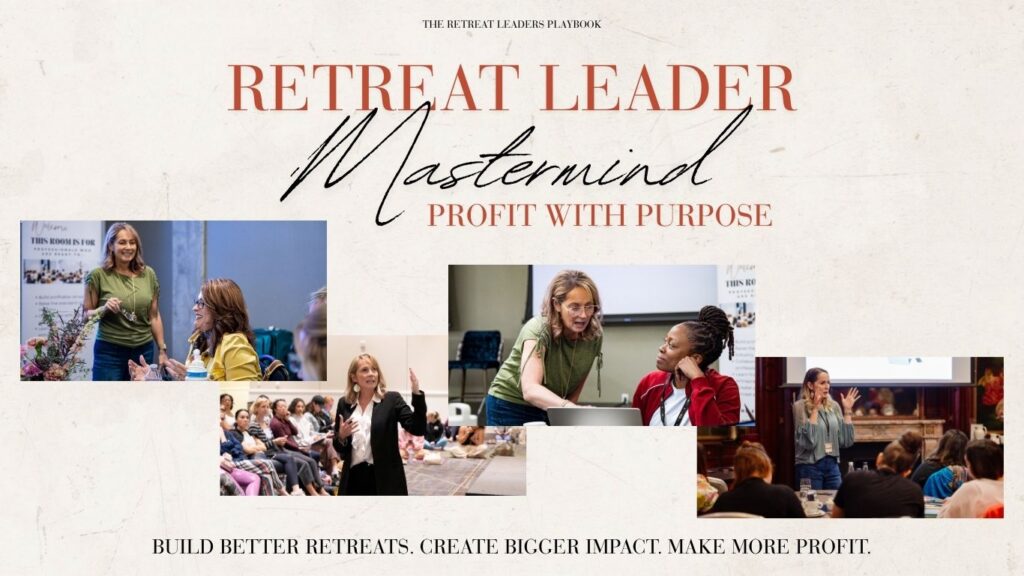
If you want a direct, strategy-filled plan for hosting sold-out, profitable retreats without guessing your way through it, come join me at the Profit with Purpose Retreat Leader Mastermind this January.
It’s my semi-annual, in-person mastermind for retreat leaders who are done breaking even. We dig into pricing, marketing, filling your retreats, and building a retreat business that actually pays you. And when you join, you also get access to the Retreat Leaders Academy.
Grab your seat here: https://mindbodycomplete.com/profit-with-purpose-mastermind/
work with US
Ready to Transform Your Retreats?
Join our community of successful retreat leaders and unlock the secrets to hosting profitable, life-changing retreats


